DH110
DH110 Assignment 1: Heuristic Evaluation
Carlie Huang
Bridge: Inter-Generational Messaging with Instant and Intuitive Translation
I’m planning to work on a project that connects family members who speak different native languages through instant translation. As the child of an immigrant, I’ve struggled to communicate effectively with my parent, grandparents, and extended family all my life. I hope that by providing a clean, easy-to-use interface, I can drive seamless communication between all generations alike.
To get started on this project, I will analyze the user experience of two possible competitors using Nielson’s 10 Heuristics in order to understand what I can improve upon in my own application. The competitors I’ve selected to evaluate are Google Translate and Slatch.
Note that for the following evaluations, I’m accessing the respective apps on an iPhone 13 running iOS 16.3 on April 10, 2023.
I would like to credit Kapil Viswanathan for this template that I used for the heuristic evaluation tables. However, I replaced the descriptions of each heuristic with my own and used a 1-3 severity rating as specified in the assignment.
Competitor 1: Google Translate
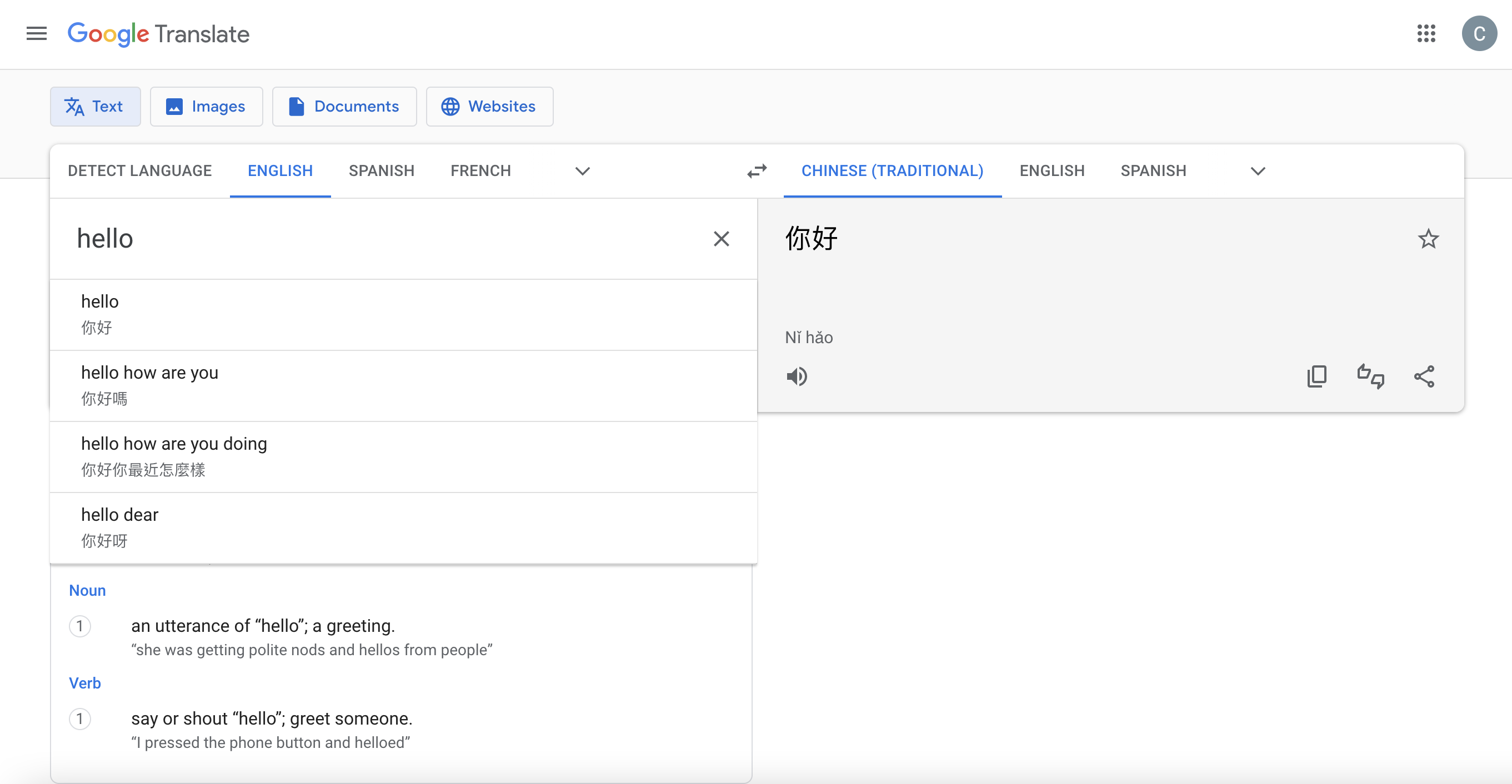
The Google Translate app is a powerful tool that allows users to translate text, speech, images, and handwriting in over 100 languages. It’s one of the most widely used translation apps in the world, with over 100 million active users1. With the app, users can input a phrase, sentence, or even an entire document and have it translated into their preferred language. The app also supports real-time translation of conversations, allowing users to communicate with people who speak a different language in real-time. Additionally, users can save commonly used translations for quick access and use the app’s camera feature to translate text in real-time. The translation features bear many similarities to those in my proposed app, Bridge, but Google Translation lacks integration with messaging services; therefore, its translation capabilities are not utilized to their full potential.
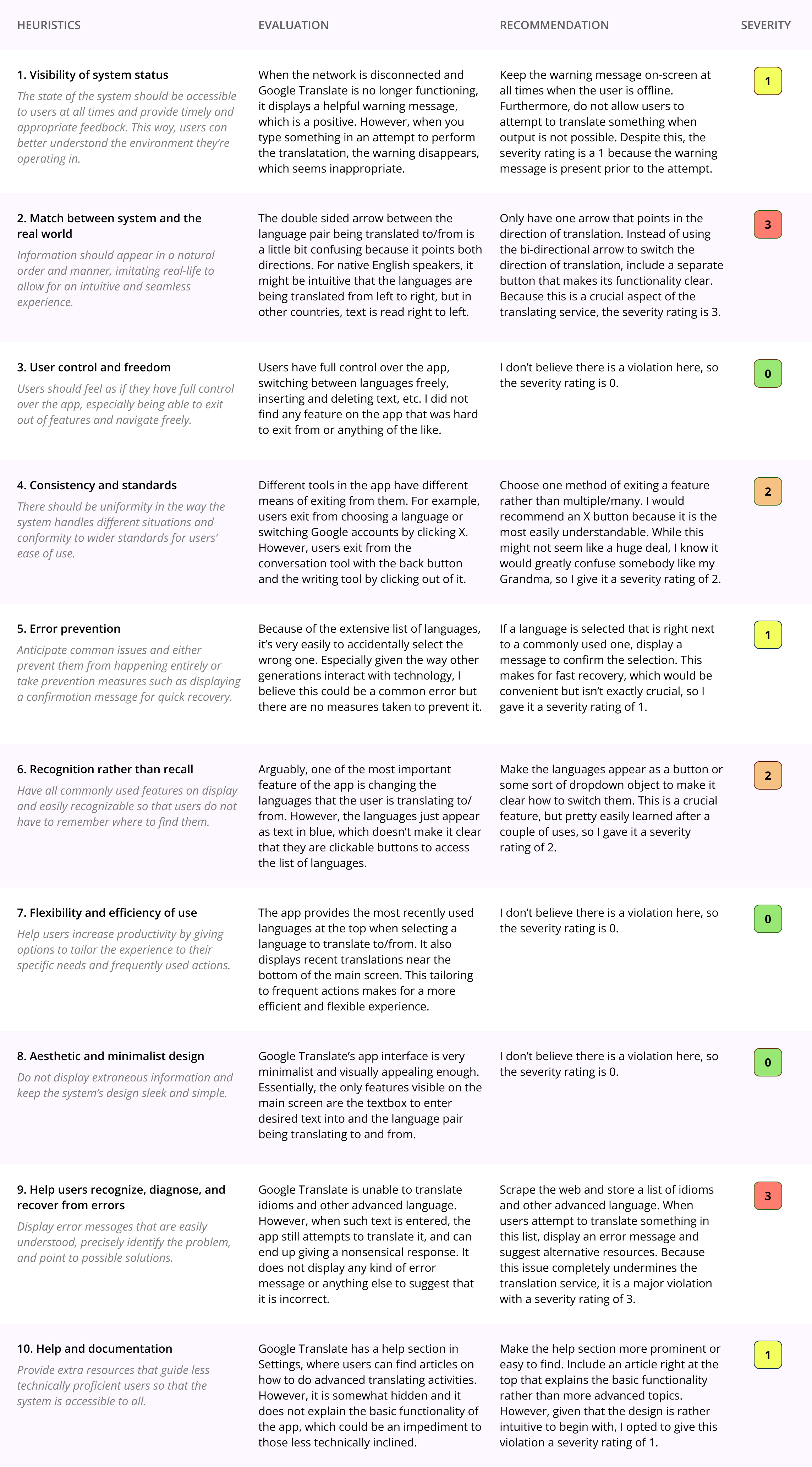
While the Google Translate app is widely used, its user experience is not without flaws. While the app is generally well-designed and easy to use, the translation quality can be inconsistent, particularly with more complex phrases or idiomatic expressions. Additionally, the app’s reliance on machine learning algorithms means that it may struggle with certain languages or dialects, leading to inaccuracies or mistranslations. Another significant issue with the app is the bi-directional arrow displayed between the language pairing that can be confusing in both its functionality and meaning, especially for those whose native language reads from right to left. Overall, while the Google Translate a is a useful tool for language translation, it still violates several of Nielson’s 10 Heuristics, as shown in the table below.
Competitor 2: Slatch
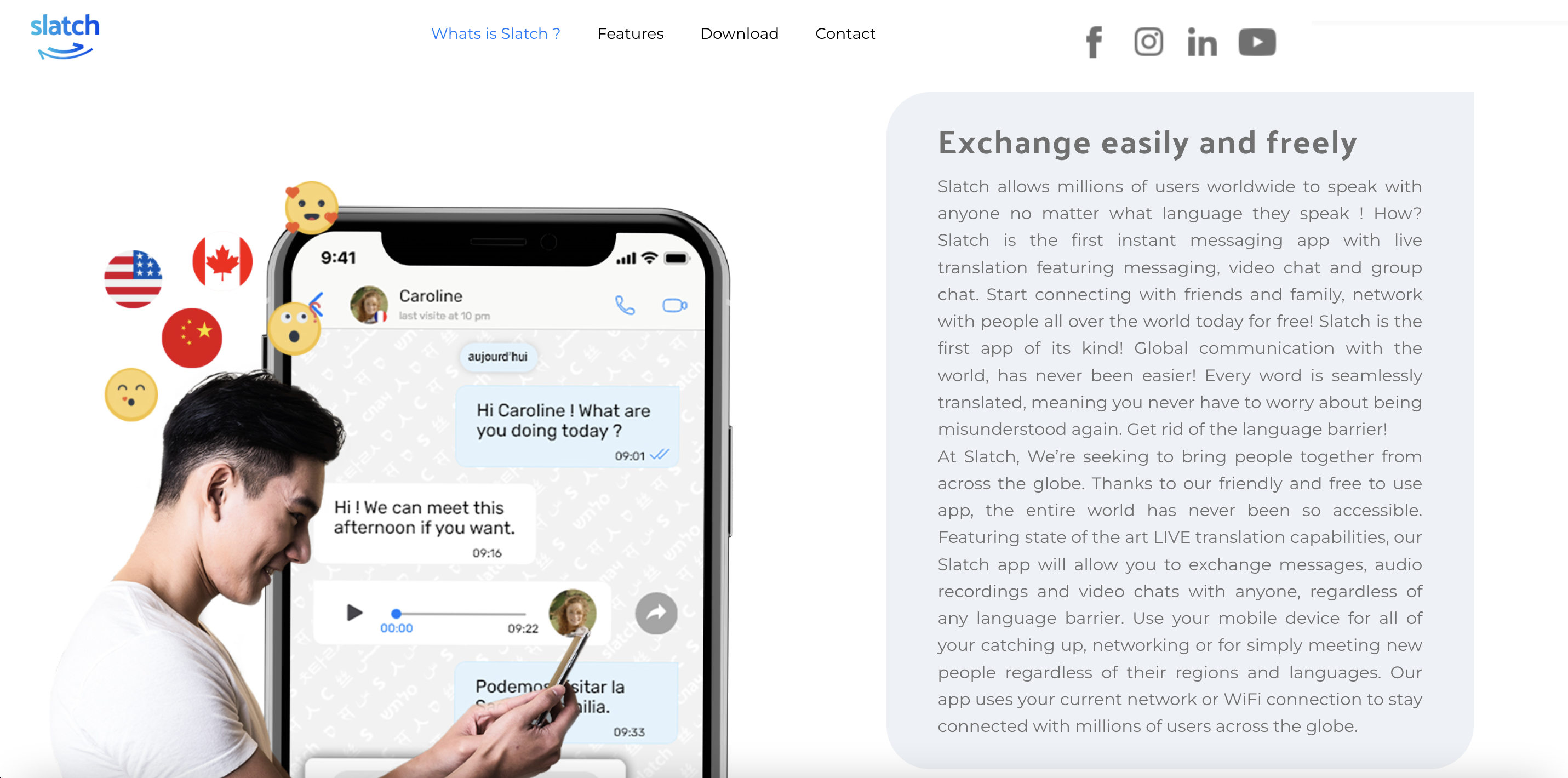
Slatch is a mobile app that is the most conceptually similar to my proposed app, Bridge, that I could find. It is a messaging platform that allows users to connect with one another through text, voice, and video messaging. The app offers various features, including group messaging and file sharing, but most notable and relevant to my project is its instant translation feature: it offers translation in all its modes of communication (text, voice, and video). While I couldn’t find a comprehensive list of all the languages offered, the description on its app store page says it supports “English, French, Italian, Spanish, German, Russian Arabic, Chinese, Hindi, Japanese, Dutch, Portuguese, Vietnamese, Swahili and so many more2.” While, similarly to Bridge, it aims to break down communication barriers via instant translation, Slatch targets business applications over interpersonal/family ones.
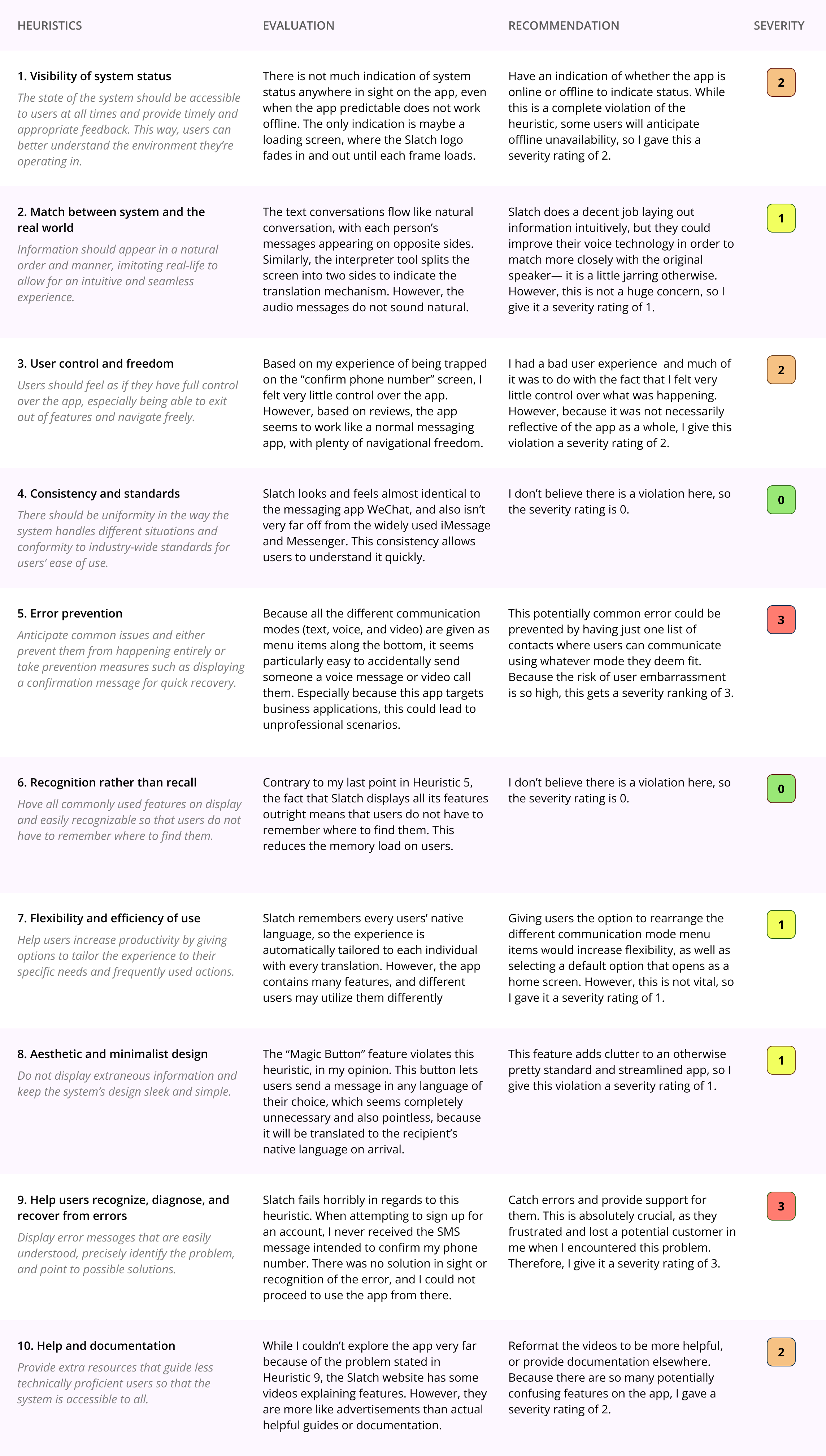
While the Slatch app is great in theory, it has many user experiene issues. I attempted to sign up for the app, but I never received the SMS message intended to confirm my phone number, despite repeated attempts, so I did not end up even being able to engage with the actual live app; this must have been one of the most frusturating experiences I’ve had as a user. Therefore, I looked at screenshots and other resources to perform my evaluation. Despite my setbacks, one positive thing I discovered about Slatch is its similarity to other messaging platforms, which makes it easy for those used to other platforms to pick up.
Conclusion
By analyzing both the leading translation resource and the conceptually similar Slatch, I gained a lot of insight into the user experience decisions that go into both translation and messaging implementations, as well as what to avoid. I will bring these lessons with me as I move forward in my project, so that I can effectively Bridge inter-generational language gaps.